
- Special Session 2 -
Advanced Deep Learning for Hyperspectral and Remote Sensing Image Processing
● Please submit via: Electronic Submission System and select special session 2
- Hyperspectral and remote sensing technologies have emerged as pivotal tools for Earth observation, providing rich spectral-spatial information for a wide range of applications, from environmental monitoring and precision agriculture to urban planning and military surveillance. The exponential growth in data volume and complexity, driven by advanced sensors, presents significant challenges for traditional processing methods. Consequently, advanced deep learning (DL) techniques have become indispensable for extracting meaningful knowledge and enabling intelligent decision-making from these vast datasets. This special session focuses on the latest advancements and emerging trends in deep learning methodologies tailored specifically for hyperspectral and remote sensing imagery. We aim to explore innovative solutions that address the unique characteristics of spectral data, such as high dimensionality, limited labeled samples, and complex spatial-spectral correlations.
- ● Related topics | 征稿主题
The session will cover a broad spectrum of cutting-edge topics, including:
● Advanced Architectures: Novel designs leveraging CNNs, Vision Transformers (ViTs), Mamba, and hybrid models to capture intricate spatial-spectral patterns.
● Image Restoration & Fusion: Techniques for super-resolution, denoising, and multimodal data fusion (e.g., hyperspectral with LiDAR) to enhance data quality.
● Intelligent Classification: Robust algorithms for land cover classification, target detection, and change detection, with a focus on few-shot and self-supervised learning.
● Generative AI: The application of GANs, Diffusion Models, and generative priors for data augmentation and solving ill-posed inverse problems.
● Efficiency & Interpretability: Research on lightweight networks, model compression, and explainable AI for real-time, reliable deployment.
● Organizer(s)
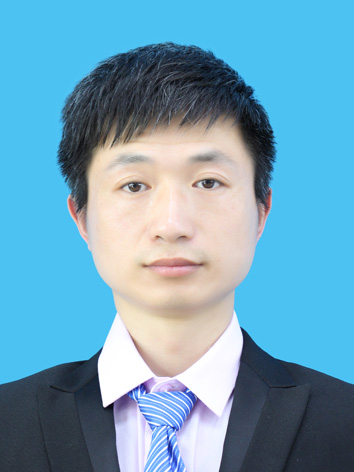
Dr. Jianjun Liu, Jiangnan University, China
Heng Zhou, Jiangnan University, China
| Jianjun Liu | Heng Zhou | ||
 |
 |